

More Than Just a Bread Topping: Creative Ways to Use Homemade Jam
November 13, 2026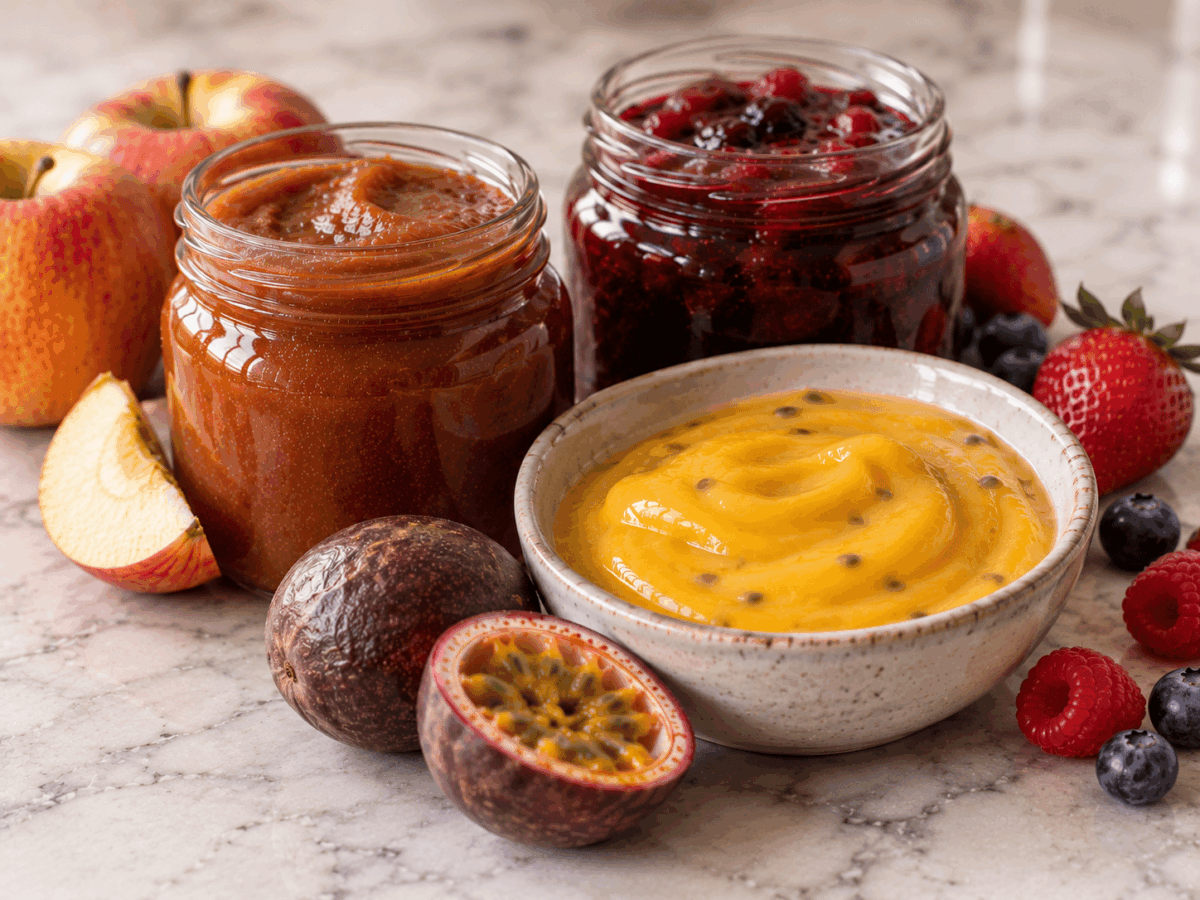
Fruit Butters, Curds and Compotes: Making the Most of Seasonal Fruit
When you've got plenty of fruit on your hands, it's tempting to reach for the usual recipes: a crumble, a fruit tart or perhaps another batch of jam. But there are other ways to make good use of fresh produce. Fruit butters, curds and compotes each have their own place in the kitchen, and they're not interchangeable. Some concentrate the flavour of fruit through slow cooking, others rely on acidity and richness, while some keep the fruit largely intact. Knowing what makes each preparation different opens up more possibilities, particularly when working with fruit that's only available for a short time.
Fruit Butters: Slow Cooking for a Richer Flavour
Apple butter is a good example of what happens when fruit is given plenty of time to cook. Apples are softened, puréed and slowly reduced until they develop a thick, almost velvety consistency. The flavour becomes deeper as the moisture evaporates, and the natural sugars take on a gentle caramelised quality. Pears, peaches and plums can be treated in much the same way, although their water content and sweetness will affect the cooking time. Spices such as cinnamon and nutmeg are traditional additions, but they aren't essential. The fruit should remain the main flavour. Fruit butters are also quite different from jam. They don't have the same firm, set consistency and generally have a smoother, more concentrated finish. Spread them on toast, spoon them over pancakes or serve them with a slice of mature cheese.
Fruit Curds: More Than Just Lemon
Lemon curd has long been a favourite filling for tarts and cakes, but other fruits deserve a place here too. Passion fruit is particularly good because its sharp, aromatic flavour cuts through the richness of butter and eggs. Lime produces a more pronounced tang, while orange gives a softer, sweeter curd. The balance between acidity and richness is what makes a good curd work. Too much sweetness can leave it cloying, while the right amount of citrus keeps the flavour lively. Unlike fruit butters, curds also rely on eggs for their texture. They need gentle heat to thicken properly; too much heat can scramble the eggs and leave the mixture grainy. A well-made curd should be smooth and thick enough to hold its shape when spooned. Beyond tart fillings, it's worth trying in sponge cakes, layered desserts or simply served with fresh berries and yoghurt.
Fruit Compotes: Keeping the Fruit Intact
Compotes are a good choice when you want the fruit itself to remain part of the finished dish. Rather than cooking everything down into a smooth mixture, the fruit is gently heated with a little sugar and liquid until tender. This works particularly well with stone fruit. Plums become soft and release plenty of juice, while apricots and peaches develop a fragrant sweetness. Apples and pears are firmer and can hold their shape well during cooking. Berries need much less time, as they can quickly collapse into the liquid. The amount of sugar depends on the fruit, and a little lemon juice can help balance particularly sweet varieties. Compotes are often associated with breakfast and dessert, but they're equally useful with savoury dishes. A plum compote alongside roast pork or an apricot version with a cheese board can be a welcome change from the usual accompaniments.
The Role of Acidity, Sweetness and Texture
Fruit doesn't behave the same way once it reaches the saucepan, and understanding a few differences can make a noticeable difference to the result. Take apples and pears, for example. Their flesh softens during cooking, but apples contain more pectin, which helps mixtures thicken. This makes them useful for fruit butters, particularly when you want a dense consistency without adding a thickening agent. Citrus and passion fruit bring the acidity needed to balance the butter, sugar and eggs in curds. With sweeter fruits, such as ripe peaches, that balance can be harder to achieve without adding another acidic ingredient. Ripeness matters too. A slightly firm peach will hold its shape better in a compote, while a very ripe one may break down before the cooking liquid has had time to thicken. These aren't strict rules, but they're useful differences to understand when deciding what to make with the fruit you have.
Beyond Breakfast and Dessert
There's no reason to limit these preparations to the sweet side of the kitchen. Fruit butters can be surprisingly good with savoury food, particularly when their sweetness is balanced by something salty or sharp. Apple butter works with mature cheddar, pork and roast vegetables, while a spiced plum compote can accompany duck or other roasted meats. Citrus curd is more naturally suited to baking, but a small amount can add a bright contrast to rich desserts and creamy fillings. Compotes are perhaps the easiest to experiment with, especially when paired with cheese. Try apricot with a soft goat's cheese or plum with a stronger, aged variety. These combinations work because fruit brings both sweetness and acidity, two qualities that can balance richer ingredients.
When the Best Fruit Is Already in the Kitchen
Sometimes the most interesting thing to make starts with whatever is sitting in the fruit bowl. A few overripe pears might not be particularly appealing to eat fresh, but they'll soften beautifully into a fruit butter. A bowl of plums can become a compote, while leftover passion fruit pulp might be just enough for a small batch of curd. There's no need to wait for a special occasion or plan an elaborate dessert around them. These preparations are useful precisely because they give familiar fruit another purpose, and sometimes the simplest way to enjoy a good seasonal ingredient is to prepare it differently.